Marijuana Schedule III Reclassification: Federal vs State Law Guide
Marijuana Schedule III Reclassification: What the Law Means Now
A compliance-first explainer for cultivators and consumers. We break down the executive order, what Schedule III could change, and what remains illegal.
Understanding Marijuana Schedule III Reclassification
Marijuana Schedule III reclassification is being pushed forward by a new executive order, but it is not the same thing as “legalization.” The key is what’s actually changing (research and some business rules) versus what still carries real legal risk (unlicensed production, interstate transport, and federal enforcement).
Heads up: This page explains policy and general law concepts. It does not help anyone avoid law enforcement or “get away with” illegal activity. If you’re operating a business, talk to a licensed attorney in your state.
1) What happened
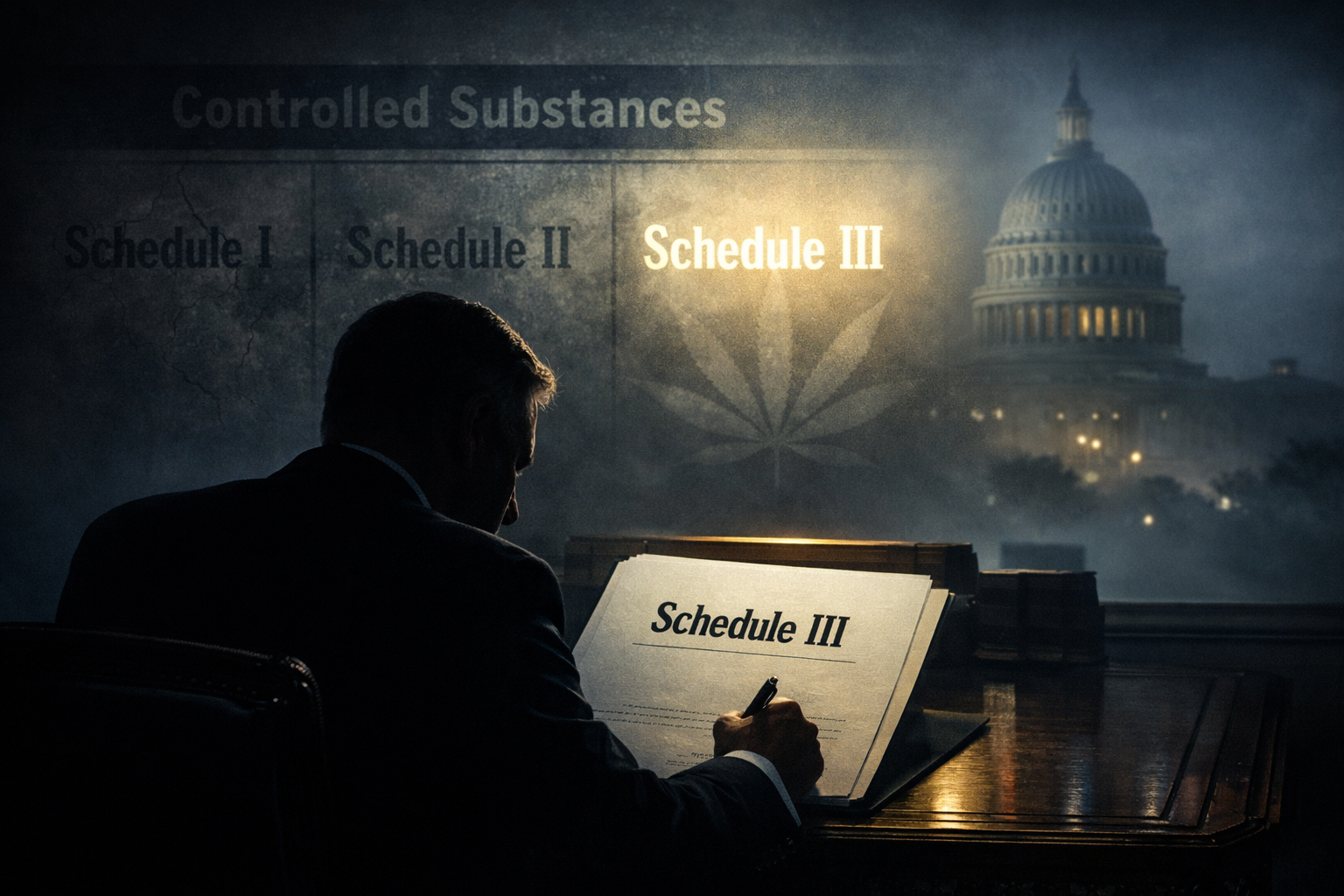
On December 18, 2025, the White House issued an executive order titled “Increasing Medical Marijuana and Cannabidiol Research”. It directs the Attorney General to take steps to complete the rulemaking process to reschedule marijuana to Schedule III under the Controlled Substances Act.
What the order does
Pushes DOJ/DEA to finish the formal scheduling process faster (rulemaking required).
What it does NOT do
It does not instantly change federal law today, and it does not legalize recreational marijuana nationwide.
2) What changes (if Schedule III is finalized)
Schedule status matters because it determines how the federal government treats the substance for research, medicine, and certain business rules. If marijuana becomes Schedule III through finalized DEA rulemaking, common impacts discussed by policy and industry analysts include:
Research gets easier
Less red tape for clinical and medical research compared to Schedule I—more legitimate studies and product development.
Taxes may change for licensed operators
Many in the industry focus on IRS 280E—Schedule III status could reduce or remove certain tax penalties that hit cannabis businesses hard (depending on how rules apply).
The important nuance: “Schedule III” suggests the federal government recognizes some medical use, but it still treats the substance as controlled. That means compliance gets more complicated—not less—unless you’re operating inside a legal framework.
3) What does NOT change (the stuff people get wrong)
This is the part that matters for cultivators, distributors, and everyday users: rescheduling is not the same as legalizing. Even with Schedule III, several high-risk areas can remain illegal under federal law.
Interstate transport
Moving cannabis across state lines is one of the fastest ways to turn “state-legal” into federal exposure.
Unlicensed production & sales
Growing or selling outside your state’s licensed system can still trigger serious criminal penalties.
Federal property rules
Military bases, federal buildings, many federal lands—state legality doesn’t override federal restrictions there.
Driving / impairment laws
DUI enforcement and impairment standards remain a major risk area regardless of scheduling.
4) For cultivators & operators (compliance-first)
If you grow, manufacture, distribute, or manage a cannabis business, the safest mindset is: “Schedule III = more scrutiny + more paperwork, not freedom.”
Operator checklist (general): licensing status clean, inventory tracking tight, taxes documented, transport rules followed, and legal counsel on retainer.
Also understand the market reality: even with a policy shift, banks, payment processors, and insurers may still be cautious until rules are crystal-clear.
5) For consumers & patients (risk clarity)
For everyday users: Schedule III does not automatically mean “you’re safe everywhere.” It mainly changes how the federal system classifies marijuana for regulation and medical research. Your real-world safety still depends on your state law, your location, and how you handle transport and possession.
State legality still matters
Licensing and retail access remain state-run. State rules can be strict even in legal markets.
Federal zones are different
Airports, federal buildings, military property—risks can increase regardless of your state’s laws.
6) About the illegal market (risk reality)
Some people hear “Schedule III” and assume enforcement disappears. That’s not how it works. Unlicensed cultivation and distribution can still be prosecuted, and the penalties can compound fast depending on scale, transport, and intent.
Reality check: If you’re outside the licensed system, the “law” section of this page is your warning label—rescheduling does not make unlicensed operations legitimate.
7) Timeline: what’s next
The executive order is a directive. The actual legal change requires the DEA/DOJ to complete formal rulemaking steps. That typically involves publication, administrative process, and potential challenges before anything is final.
Right now
The executive order exists; federal scheduling is not “magically changed” overnight.
Next phase
DEA/DOJ rulemaking steps proceed; stakeholders may support or challenge the process.
8) Sources (outbound links)
We recommend keeping outbound citations to authoritative sources (helps credibility + SEO). Here are reliable references:
• White House — Executive Order text: Increasing Medical Marijuana and Cannabidiol Research
• White House — Fact Sheet: Policy summary & intent
• Reuters — What it means for consumers: Explainer
• OSU Drug Enforcement & Policy Center — Process overview: Federal marijuana rescheduling process
• PBS NewsHour — Video coverage: Coverage
About the Author